


Fit Most FDM 3D Printers
The all-new AMS lite is elegant and reliable, making multi-color 3D printing accessible to everyone.


Outstanding chemical & hydrolytic resistance


It has excellent resistance to a wide range of chemicals, acids and alkalis. Its extremely low moisture/water absorption ensures long-term dimensional stability and performance integrity in wet or humid conditions, a critical advantage over nylon-based materials.

It can achieve UL94 V-0 grade without the addition of flame retardants, providing intrinsically safe features for applications with strict fire protection requirements.

Carbon Fiber reinforcement significantly enhances tensile strength and rigidity, and its performance can still be maintained at temperatures above 200℃, with excellent creep resistance.

Its low shrinkage and thermal expansion coefficient, combined with a formulation optimized for open-chamber printing at high bed temperatures, enable the production of large, precise parts with minimal warping.

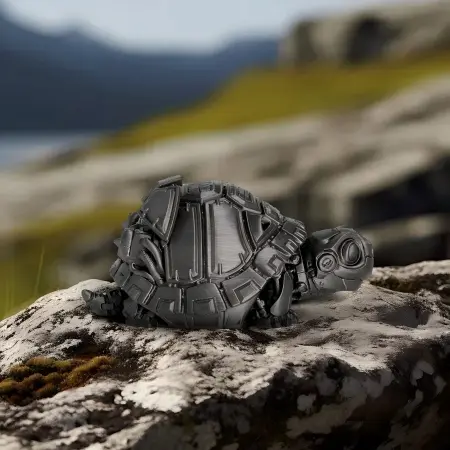
Producing components with a uniform, professional-grade matte surface that is both aesthetically pleasing and functional.

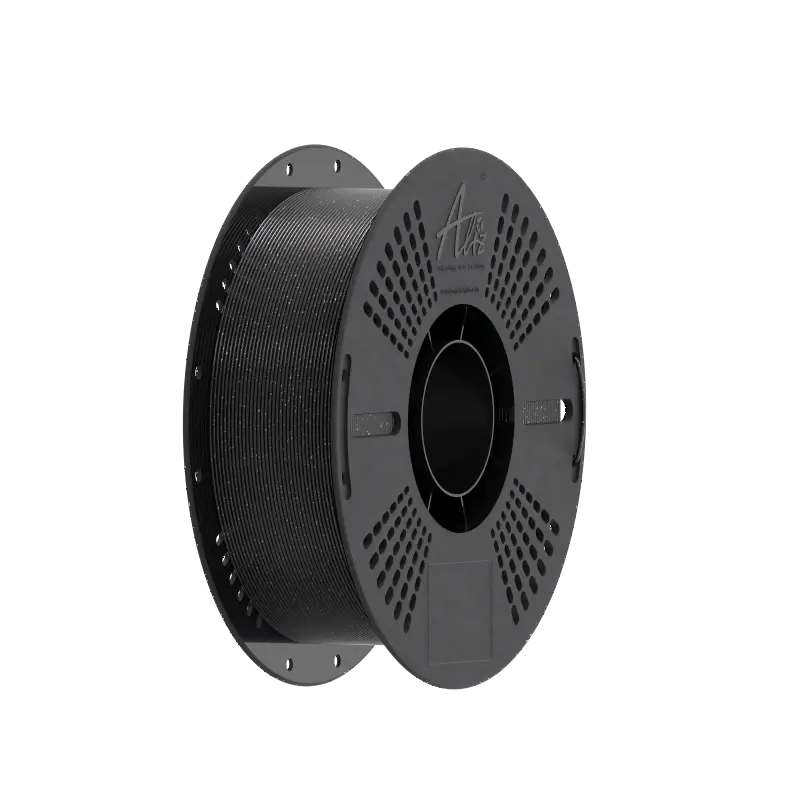
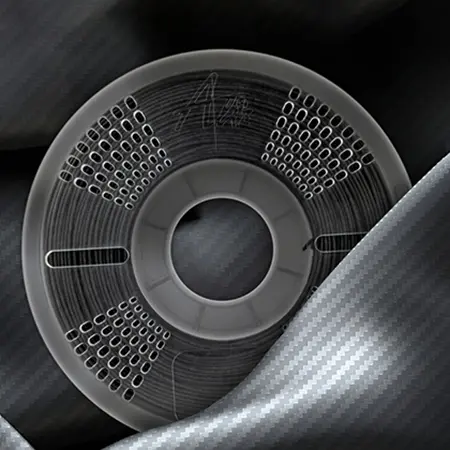
Carbon fiber matte texture reduces layer lines, delivering a refined, professional finish.
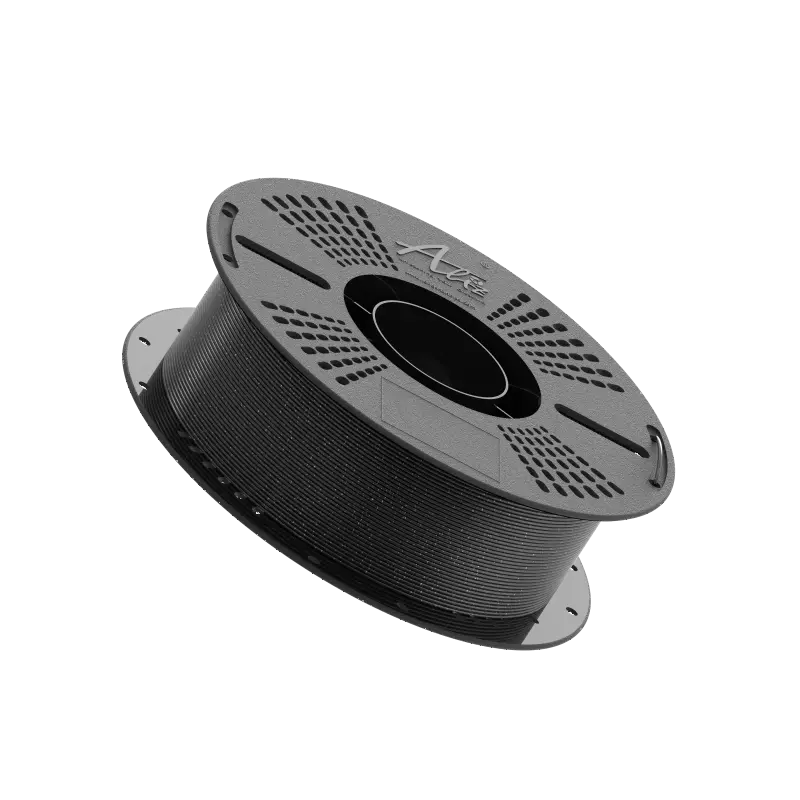


Carbon fiber improves material shrinkage on cooling and reduces warpage.
The all-new AMS lite is elegant and reliable, making multi-color 3D printing accessible to everyone.
| Property | Testing Method | Testing Condition | Injection Molding Typical Value | 3D Printing X-Y Axis Typical Value | 3D Printing Z Axis Typical Value | Unit |
| Tensile Strength | ISO 527 | 50mm/min | 103 | 77±4 | 30.5±2 | MPa |
| Elongation at Break | ISO 527 | 50mm/min | 2.1 | 2±1 | 1.2±0.5 | % |
| Tensile Modulus | ISO 527 | 50mm/min | 6818.2 | 5635.9±200 | 2547.9±300 | MPa |
| Flexural Strength | ISO 178 | 2mm/min | 140.9 | 105±4 | 42±4 | MPa |
| Flexural Modulus | ISO 178 | 2mm/min | 6705 | 6265±200 | 2863.7±300 | MPa |
| Charpy Impact Strength | ISO 179 | 23℃ | 31 | 12.9±2 | 3.6±1 | KJ/㎡ |
| Izod Impact Strength | ISO 180 | 23℃ | 27 | 12.8±2 | 3.1±1 | KJ/㎡ |
| Property | Testing Method | Testing Condition | Typical Value | Unit |
| Density | ISO 1183 | Immersion | 1.27 | g/cm3 |
| Melt Flow index(MFR) | ISO 1133 | 315℃/2.16kg | 10-20 | g/10 min |
| Property | Testing Method | Testing Condition | Injection Molding Typical Value | 3D Printing Typical Value | Unit |
| Moisture Absorption | ISO 62 | 50%RH*23℃ | 0.02 | 0.02 | % |
| Property | Testing Result |
| Weak Acid Resistance | Resistant |
| Strong Acid Resistance | Resistant |
| Weak Base Resistance | Resistant |
| Strong Base Resistance | Resistant |
| Organic Solution Resistance | Resistant |
| Oil and Grease Resistance | Resistant |
| Property | Testing Method | Testing Condition | Injection Molding Typical Value | 3D Printing X-Y Axis Typical Value | 3D Printing Z Axis Typical Value | Unit |
| Glass Transition Temperature | DSC | 10℃/min | 89.8 | ℃ | ||
| Melting Point | DSC | 10℃/min | 280.4 | ℃ | ||
| Distortion Temperature | TGA | 20℃/min | >400 | ℃ | ||
| Heat Distortion Temperature | ISO 75 | 0.45MPa | 249.1 | 245.2 | 200.1 | ℃ |
| Heat Distortion Temperature | ISO 75 | 1.8MPa | 223.4 | 220.1 | 194.7 | ℃ |
| Vicat Softening Temperature | ISO 306 | 50℃/10N | N/A | ℃ | ||
| Printing Temperature | 300-350(℃) |
| Bed Temperature | 100(℃) |
| Wall Layers | 2 Layers |
| Top and Bottom Layers | 4 Layers |
| Infill | 100% |
| Ambient Temperature | 25℃ |
| Cooling Fan | 0-10% |
| Printing Speed | 30-50(mm/s) |
| Nozzle Diameter | 0.4 mm |
| Printing Temperature | 330(℃) |
| Bed Temperature | 100(℃) |
| Wall Layers | 2 Layers |
| Top and Bottom Layers | 4 Layers |
| Infill | 100% |
| Ambient Temperature | 25℃ |
| Cooling Fan | 10% |
| Printing Speed | 50 (mm/s) |
| Nozzle Diameter | 0.4 mm |

Jiangyin Longshan Synthetic Materials Co., Ltd. is a modified plastics company integrating R&D, production and sales, specializing in the development of medium and high-end modified materials.