


Fit Most FDM 3D Printers
The all-new AMS lite is elegant and reliable, making multi-color 3D printing accessible to everyone.


More durable, resistant to deformation


The incorporation of glass fibers significantly increases the strength and rigidity of the material compared to pure PETG, especially improving its tensile heat stability. PETG-GF has good thermal stability and can maintain stable performance at higher temperatures, which is suitable for 3D Printing in high temperature environments.

Printed parts can withstand higher operating temperatures without deformation or softening.

PETG-GF exhibits strong adhesion to the heated bed during printing, minimizing warping and deformation during printing.

The inclusion of glass fibers enhances PETG-GF

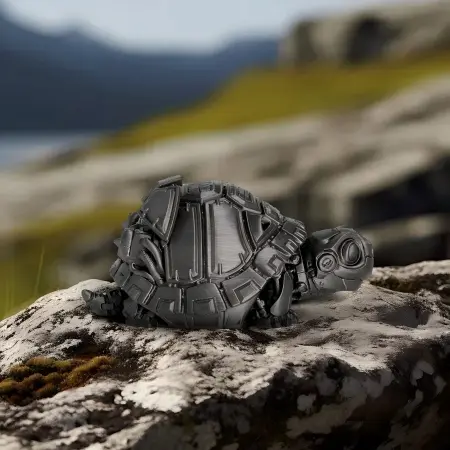
Despite the presence of glass fibers, PETG-GF maintains a relatively smooth printed surface finish, partly due to the print-friendly nature of PETG itself.

Inheriting the eco-friendly characteristics of PETG, PETG-GF is a non-toxic, odorless, and BPA-free material. It has been certified by the FDA for direct food contact, making it highly suitable for manufacturing products related to food handling.
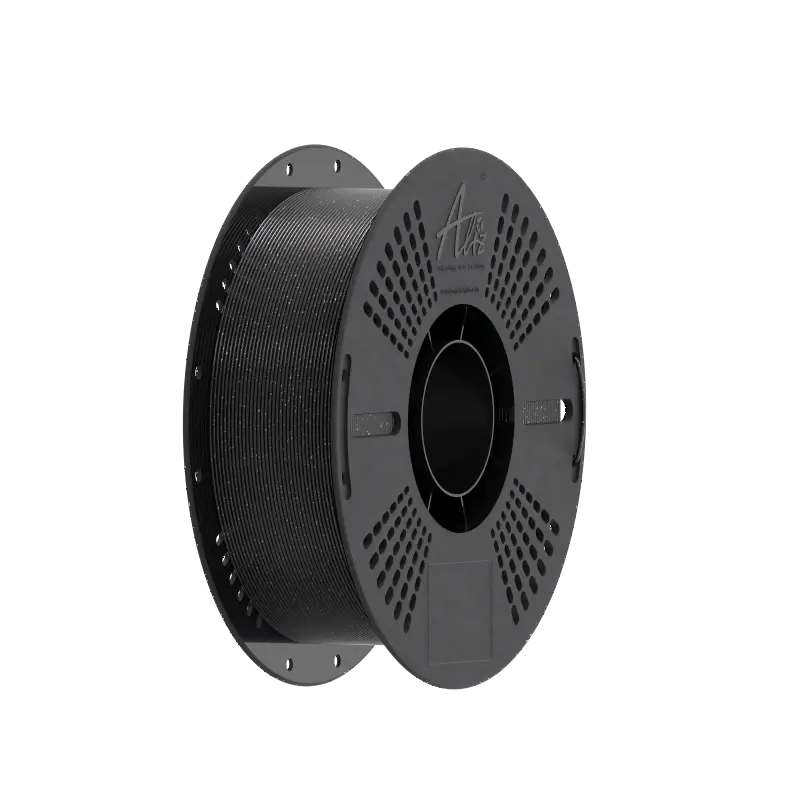
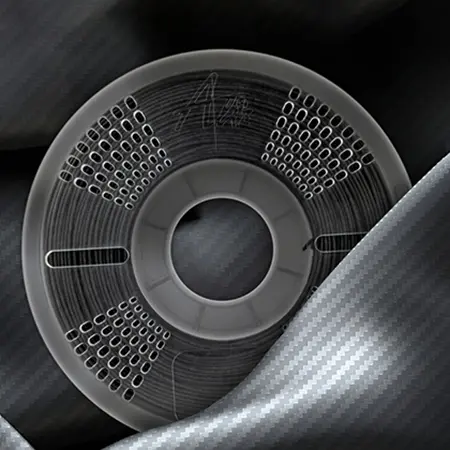
Carbon fiber matte texture reduces layer lines, delivering a refined, professional finish.
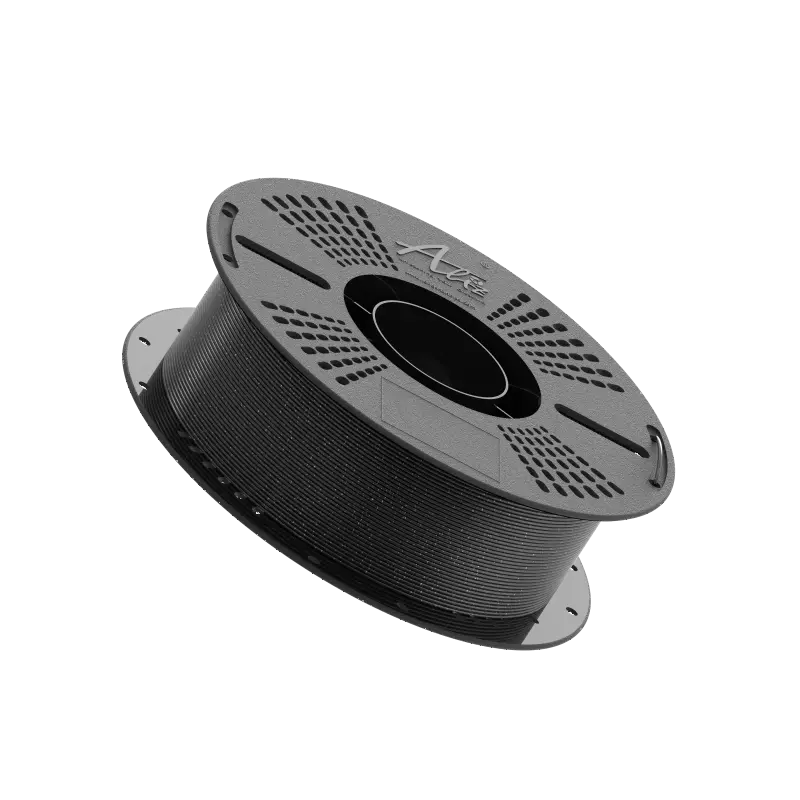


Carbon fiber improves material shrinkage on cooling and reduces warpage.
The all-new AMS lite is elegant and reliable, making multi-color 3D printing accessible to everyone.
| Property | Testing Method | Testing Condition | Injection Molding Typical Value | 3D Printing X-Y Axis Typical Value | 3D Printing Z Axis Typical Value | Unit |
| Tensile Strength | ISO 527 | 50mm/min | 100 | 52.9±4 | 25.3±2 | MPa |
| Elongation at Break | ISO 527 | 50mm/min | 4.4 | 2.7±1 | 1.1±0.3 | % |
| Tensile Modulus | ISO 527 | 50mm/min | 4429 | 2621.3±100 | 1704.2±100 | MPa |
| Flexural Strength | ISO 178 | 2mm/min | 141.4 | 83.4±4 | 36.2±2 | MPa |
| Flexural Modulus | ISO 178 | 2mm/min | 5120 | 2540±100 | 1595±100 | MPa |
| Charpy Impact Strength | ISO 179 | 23℃ | 42.5 | 13±2 | 3.2±1 | KJ/㎡ |
| Izod Impact Strength | ISO 180 | 23℃ | 37.7 | 11.5±2 | 2.2±1 | KJ/㎡ |
| Property | Testing Method | Testing Condition | Typical Value | Unit |
| Density | ISO 1183 | Immersion | 1.28 | g/cm3 |
| Melt Flow index(MFR) | ISO 1133 | 240℃/2.16kg | 5-15 | g/10 min |
| Property | Testing Method | Testing Condition | Injection Molding Typical Value | 3D Printing Typical Value | Unit |
| Moisture Absorption | ISO 62 | 50%RH*23℃ | 0.5 | 0.6 | % |
| Property | Testing Result |
| Weak Acid Resistance | Not Resistant |
| Strong Acid Resistance | Not Resistant |
| Weak Base Resistance | Not Resistant |
| Strong Base Resistance | Not Resistant |
| Organic Solution Resistance | Not Resistant |
| Property | Testing Method | Testing Condition | Injection Molding Typical Value | 3D Printing X-Y Axis Typical Value | 3D Printing Z Axis Typical Value | Unit |
| Glass Transition Temperature | DSC | 10℃/min | 79.1 | ℃ | ||
| Distortion Temperature | TGA | 20℃/min | N/A | ℃ | ||
| Heat Distortion Temperature | ISO 75 | 0.45MPa | 76.6 | 72.2 | 70.4 | ℃ |
| Heat Distortion Temperature | ISO 75 | 1.8MPa | 74.4 | 70.1 | 66.4 | ℃ |
| Vicat Softening Temperature | ISO 306 | 50℃/10N | 92.6 | 89 | 77.5 | ℃ |
| Printing Temperature | 250-270(℃) |
| Bed Temperature | 70-80(℃) |
| Wall Layers | 2 Layers |
| Top and Bottom Layers | 4 Layers |
| Infill | 100% |
| Ambient Temperature | 25℃ |
| Cooling Fan | 0-10% |
| Printing Speed | 30-50(mm/s) |
| Nozzle Diameter | 0.4 mm |
| Printing Temperature | 260 (℃) |
| Bed Temperature | 80 (℃) |
| Wall Layers | 2 Layers |
| Top and Bottom Layers | 4 Layers |
| Infill | 100% |
| Ambient Temperature | 25℃ |
| Cooling Fan | 10% |
| Printing Speed | 50 (mm/s) |
| Nozzle Diameter | 0.4 mm |

Jiangyin Longshan Synthetic Materials Co., Ltd. is a modified plastics company integrating R&D, production and sales, specializing in the development of medium and high-end modified materials.