


Fit Most FDM 3D Printers
The all-new AMS lite is elegant and reliable, making multi-color 3D printing accessible to everyone.


More durable, resistant to deformation


The Glass Fiber Reinforcement substantially increases tensile strength, stiffness, and dimensional stability compared to standard nylon, resulting in parts that are robust and resistant to deformation under load.

Offers improved resistance to fuels, oils, and many chemicals, alongside a higher heat deflection temperature, suitable for challenging environments.

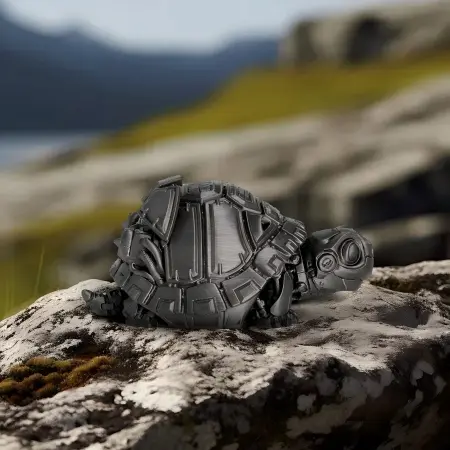
Produces components with a consistent, ready-to-use matte surface that minimizes visible layer lines and eliminates the need for post-processing.

Engineered for reliable printing at room temperature without requiring a enclosure, broadening its compatibility with almost FDM 3D Printers.

Formulated to exhibit minimal warping and ensure strong bed adhesion, facilitating successful prints of large and complex geometries.

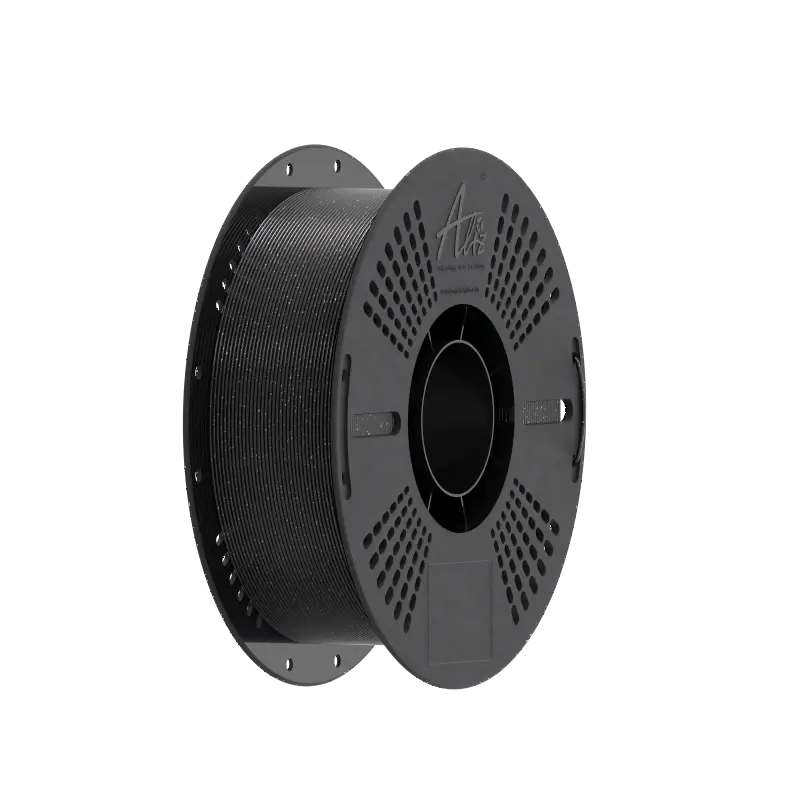
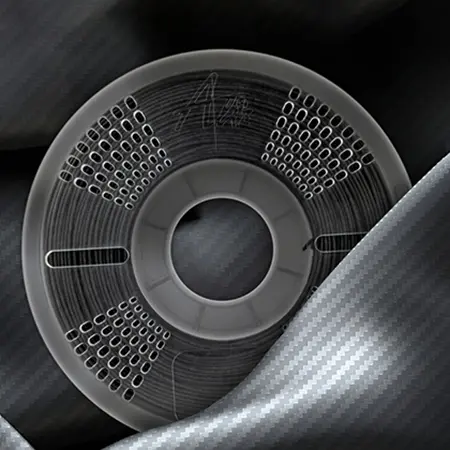
Carbon fiber matte texture reduces layer lines, delivering a refined, professional finish.
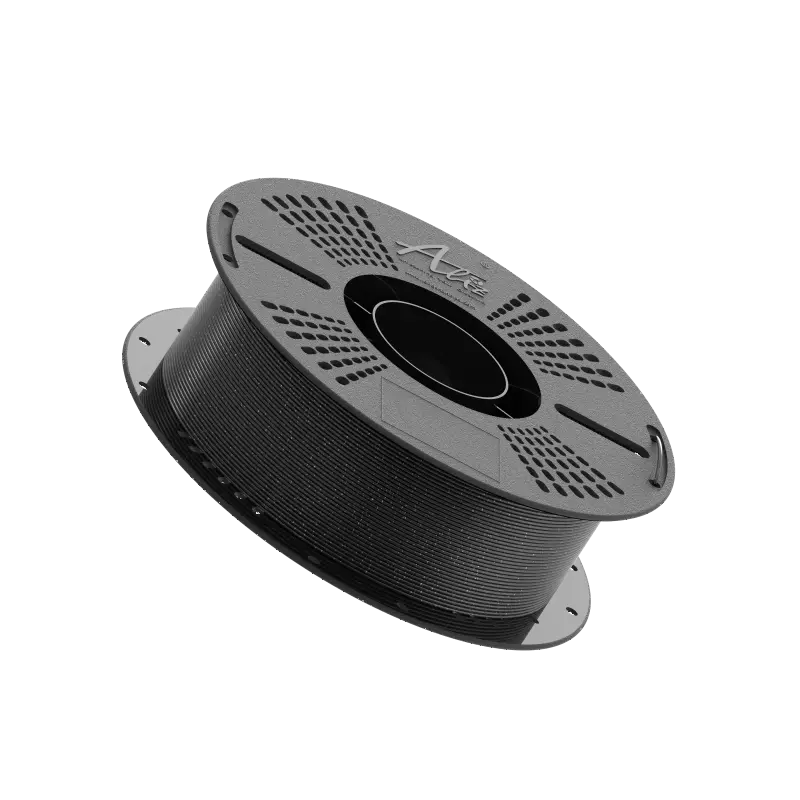


Carbon fiber improves material shrinkage on cooling and reduces warpage.
The all-new AMS lite is elegant and reliable, making multi-color 3D printing accessible to everyone.
| Property | Testing Method | Testing Condition | Injection Molding Typical Value | 3D Printing X-Y Axis Typical Value | 3D Printing Z Axis Typical Value | Unit |
| Tensile Strength | ISO 527 | 50mm/min | 140.2 | 79.1±4 | 58.1±4 | MPa |
| Elongation at Break | ISO 527 | 50mm/min | 6 | 3.2±1 | 1.9±1 | % |
| Tensile Modulus | ISO 527 | 50mm/min | 3423.7 | 3095.2±200 | 2797.8±200 | MPa |
| Flexural Strength | ISO 178 | 2mm/min | 193.2 | 124.7±5 | 57.1±5 | MPa |
| Flexural Modulus | ISO 178 | 2mm/min | 5253.3 | 3315.7±200 | 2250±200 | MPa |
| Charpy Impact Strengt | ISO 179 | 23℃ | 68.4 | 19.9±3 | 3.8±1 | KJ/㎡ |
| Izod Impact Strength | ISO 180 | 23℃ | 56.2 | 15.9±3 | 3.1±1 | KJ/㎡ |
| Property | Testing Method | Testing Condition | Typical Value | Unit |
| Density | ISO 1183 | Immersion | 1.23 | g/cm3 |
| Melt Flow index(MFR) | ISO 1133 | 275℃/2.16kg | 2-12 | g/10 min |
| Property | Testing Method | Testing Condition | Injection Molding Typical Value | 3D Printing Typical Value | Unit |
| Moisture Absorption | ISO 62 | 50%RH*23℃ | 2.5 | 2.7 | % |
| Property | Testing Result |
| Weak Acid Resistance | Not Resistant |
| Strong Acid Resistance | Not Resistant |
| Weak Base Resistance | Lightly Resistance |
| Strong Base Resistance | Not Resistant |
| Organic Solution Resistance | Not Resistant |
| Oil and Grease Resistance | Resistant |
| Property | Testing Method | Testing Condition | Injection Molding Typical Value | 3D Printing X-Y Axis Typical Value | 3D Printing Z Axis Typical Value | Unit |
| Glass Transition Temperature | DSC | 10℃/min | 84.9 | ℃ | ||
| Crystallization temperature | DSC | 10℃/min | 173.6 | ℃ | ||
| Melting Point | DSC | 10℃/min | 219.8 | ℃ | ||
| Decomposition Temperature | TGA | 20℃/min | >370 | ℃ | ||
| Heat Distortion Temperature | ISO 75 | 0.45MPa | 190.3 | 182.7 | 171.7 | ℃ |
| Heat Distortion Temperature | ISO 75 | 1.8MPa | 160.2 | 151.8 | 145.1 | ℃ |
| Vicat Softening Temperature | ISO 306 | 50℃/10N | N/A | ℃ | ||
| Printing Temperature | 270-300(℃) |
| Bed Temperature | 80-100(℃) |
| Wall Layers | 2 Layers |
| Top and Bottom Layers | 4 Layers |
| Infill | 100% |
| Ambient Temperature | 25℃ |
| Cooling Fan | 0-10% |
| Printing Speed | 30-50(mm/s) |
| Nozzle Diameter | 0.4 mm |
| Printing Temperature | 280(℃) |
| Bed Temperature | 100(℃) |
| Wall Layers | 2 Layers |
| Top and Bottom Layers | 4 Layers |
| Infill | 100% |
| Ambient Temperature | 25℃ |
| Cooling Fan | 10% |
| Printing Speed | 50(mm/s) |
| Nozzle Diameter | 0.4 mm |

Jiangyin Longshan Synthetic Materials Co., Ltd. is a modified plastics company integrating R&D, production and sales, specializing in the development of medium and high-end modified materials.